

Hydraulic Rock Breaker Maintenance Tips to Reduce Downtime and Extend Equipment Life
Hydraulic rock breakers are essential attachments in construction, quarrying, mining and demolition operations. They are designed to break tough materials through repeated impact, often while working under demanding conditions. However, continuous vibration, heavy loads and exposure to dust can gradually affect their performance. Regular maintenance helps prevent unexpected breakdowns and keeps equipment operating efficiently.
Proper care of a hydraulic rock breaker involves more than occasional inspections or replacing worn parts. Operators must pay attention to lubrication, hydraulic pressure, working techniques and the condition of critical components. Understanding these maintenance requirements can help businesses reduce unnecessary downtime, control repair costs and extend equipment service life.
Why Regular Hydraulic Breaker Maintenance Matters
Hydraulic breakers experience considerable mechanical stress during operation. Their internal components repeatedly transfer impact energy to the working tool, while hydraulic oil provides the pressure needed to drive the mechanism. Without adequate maintenance, excessive friction, contamination and incorrect operating conditions can accelerate component wear. These problems may eventually affect breaking performance or cause equipment failure.
Preventive maintenance allows operators to identify minor issues before they require extensive repairs. It also supports safer working conditions by keeping attachments, connections and moving components in suitable condition.
Maintenance requirements vary between breaker models, applications and operating environments. Following the manufacturer’s instructions is therefore essential when establishing servicing intervals.
Inspect the Breaker Before Every Shift
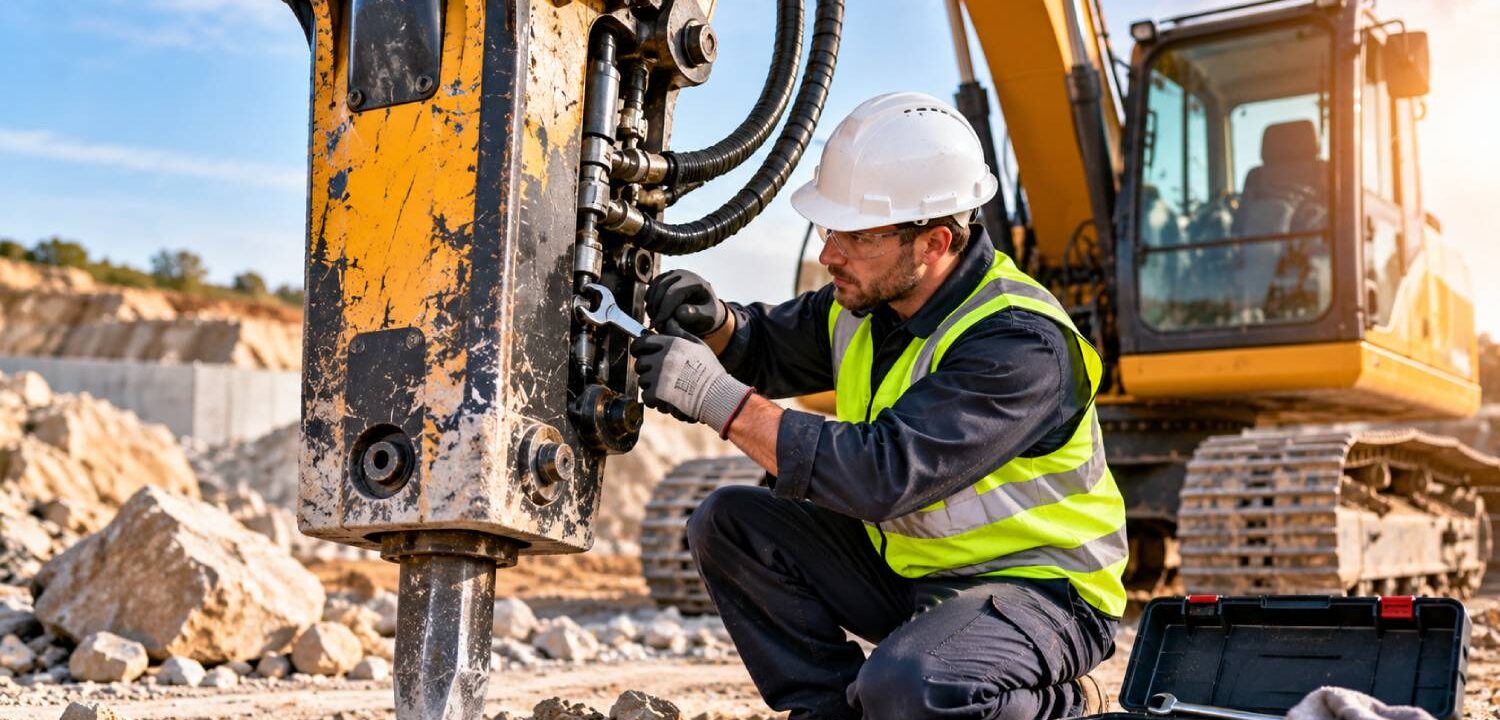
A thorough visual inspection is one of the simplest ways to identify potential problems. Operators should examine the attachment before starting work and report unusual conditions. The inspection should cover the breaker housing, working tool, retaining components and hydraulic connections. Visible cracks, damaged hoses, loose fittings or unusual oil leakage may indicate developing faults.
Operators should also examine the working tool for excessive wear, deformation or damage. A worn tool can affect breaking efficiency and place additional stress on surrounding components.
Any significant damage should be assessed before operation continues. Using equipment with damaged retaining parts or hydraulic connections can create serious safety risks.
Maintain Proper Lubrication
Lubrication is particularly important because the working tool and its bushings experience substantial friction during operation. Insufficient lubrication can increase heat, accelerate wear and shorten component life.
Use a lubricant recommended for the specific breaker model. Breaker grease must withstand the high pressures and temperatures generated during repeated impacts. The correct lubrication interval depends on the equipment design and operating conditions. Some breakers use automatic greasing systems, while others require manual lubrication at specified intervals.
Automatic systems should still be inspected regularly. Operators must check that sufficient grease is available and that the system is delivering lubricant correctly.
Excessive or incorrectly applied grease can also cause problems. Always follow the manufacturer’s recommended lubrication procedure rather than relying on guesswork.
Monitor Hydraulic Pressure and Oil Condition
Hydraulic performance directly influences breaking efficiency. Incorrect pressure, unsuitable oil flow or contaminated hydraulic fluid can affect the breaker’s operation and damage internal components.
Pressure and flow requirements must match the breaker manufacturer’s specifications and the carrier’s hydraulic system. Operators should never adjust these settings without appropriate technical guidance.
Hydraulic oil contamination deserves particular attention. Dirt, moisture and other unwanted particles can damage seals, valves and precision components. Routine servicing should include checking oil condition, inspecting filters and examining hoses for wear or leakage. Filters should be replaced according to the carrier manufacturer’s maintenance schedule.
Unusual operating temperatures, reduced impact performance or irregular movement may indicate hydraulic problems. These symptoms should be investigated promptly rather than allowing the equipment to continue working under unsuitable conditions.
Use Correct Operating Techniques to Prevent Damage
Even well-maintained equipment can deteriorate prematurely when operated incorrectly. Proper working techniques help limit unnecessary stress on the breaker and its components.
Operators should follow these practical guidelines:
- Position the tool correctly: Maintain suitable contact with the material and apply pressure in the intended working direction.
- Avoid blank firing: Do not continue operating when the tool is no longer firmly contacting the material.
- Limit continuous hammering: Follow the manufacturer’s guidance on working duration at a single position.
- Avoid sideways loading: Never use the working tool as a lever to move or lift material.
- Use suitable attachments: Select the recommended tool type for the material and application.
- Watch for unusual behaviour: Stop operation if excessive vibration, unexpected noise or reduced impact performance occurs.
Operator training is equally important. Workers should understand the correct attachment positioning, operating limits and warning signs that require maintenance attention.
Check Tool Bushings and Retaining Components
Tool bushings guide and support the working tool during operation. Over time, repeated impacts can increase clearance between the tool and its supporting components. Excessive clearance may allow unwanted movement, affecting alignment and increasing wear. Regular measurement against the manufacturer’s permitted limits helps determine when replacement is necessary.
Retaining pins and associated components also require inspection. Damage, deformation or unusual wear can affect tool retention and should never be ignored. For a hydraulic rock breaker operating in demanding environments, these checks are especially important because abrasive materials and frequent impacts can increase wear.
Replacement components should match the equipment’s requirements. Incorrectly sized or unsuitable parts may create further mechanical problems.
Recognise Early Warning Signs of Equipment Problems
Changes in performance often provide useful indications that maintenance is required. Recognising these signs can help prevent small faults from developing into larger mechanical failures. A noticeable reduction in breaking efficiency may result from hydraulic issues, tool wear or unsuitable operating conditions. Irregular impacts can also indicate problems requiring professional assessment.
Unusual knocking sounds, excessive vibration, visible oil leaks or abnormal temperatures deserve immediate attention.
Operators should stop using equipment when symptoms suggest a potentially serious fault. Continuing operation without identifying the cause may increase damage and repair costs.
Establish a Preventive Maintenance Schedule
A structured maintenance programme makes servicing more consistent and helps prevent important checks from being overlooked.
Daily inspections should be supported by periodic lubrication checks, component assessments and scheduled servicing. The exact intervals should follow manufacturer recommendations and reflect equipment usage. Keeping maintenance records is also valuable. Documenting inspections, component replacements and recurring faults helps maintenance teams identify developing wear patterns.
Complex repairs involving internal hydraulic components, accumulators or major assemblies should be handled by appropriately trained technicians. These systems may retain pressure and require specialist procedures.
Conclusion
Consistent inspection, correct lubrication, hydraulic system care and proper operating techniques are essential for maintaining breaker performance. Monitoring tool wear, bushings and retaining components also helps identify problems before they cause prolonged equipment downtime.
A well-maintained hydraulic rock breaker can deliver more dependable performance throughout its working life. Operators should follow model-specific maintenance instructions, keep accurate service records and arrange professional inspections whenever unusual wear or operating problems appear.











Leave a Comment