
Home sim racing in the UK has moved far beyond basic wheels and screens. As technology improves and expectations rise, home setups are becoming more immersive, adjustable, and performance-driven. What was once a casual pastime is now a carefully designed motorsport experience built around precision, comfort, and realism.
Home sim racing has undergone a quiet transformation across the UK. What began as a niche hobby for motorsport enthusiasts has grown into a mainstream pursuit, supported by improved hardware, smarter software, and a deeper understanding of ergonomics and realism. Sim Racer UK reflects how seriously many drivers now approach their home setups, treating them as long-term investments rather than short-term entertainment.
This evolution is not defined by excess, but by refinement. UK sim racers are prioritising realism, consistency, and comfort, shaping how modern home racing environments are designed and used.
From Casual Setups to Purpose-Built Rigs
The earliest phase of home sim racing focused on accessibility rather than performance. As interest has grown, the limitations of improvised setups have become more apparent, driving a move toward dedicated, purpose-built solutions.
Early home racing limitations
Traditional home racing setups were often improvised. Wheels were clamped to desks, pedals rested loosely on floors, and seating was rarely designed for driving posture. While these arrangements allowed people to participate, they introduced instability, fatigue, and inconsistent control that limited progression.
As sim racing gained popularity, many UK users began recognising that performance issues were often caused by the setup itself rather than driving ability.
The shift toward dedicated sim racing rigs
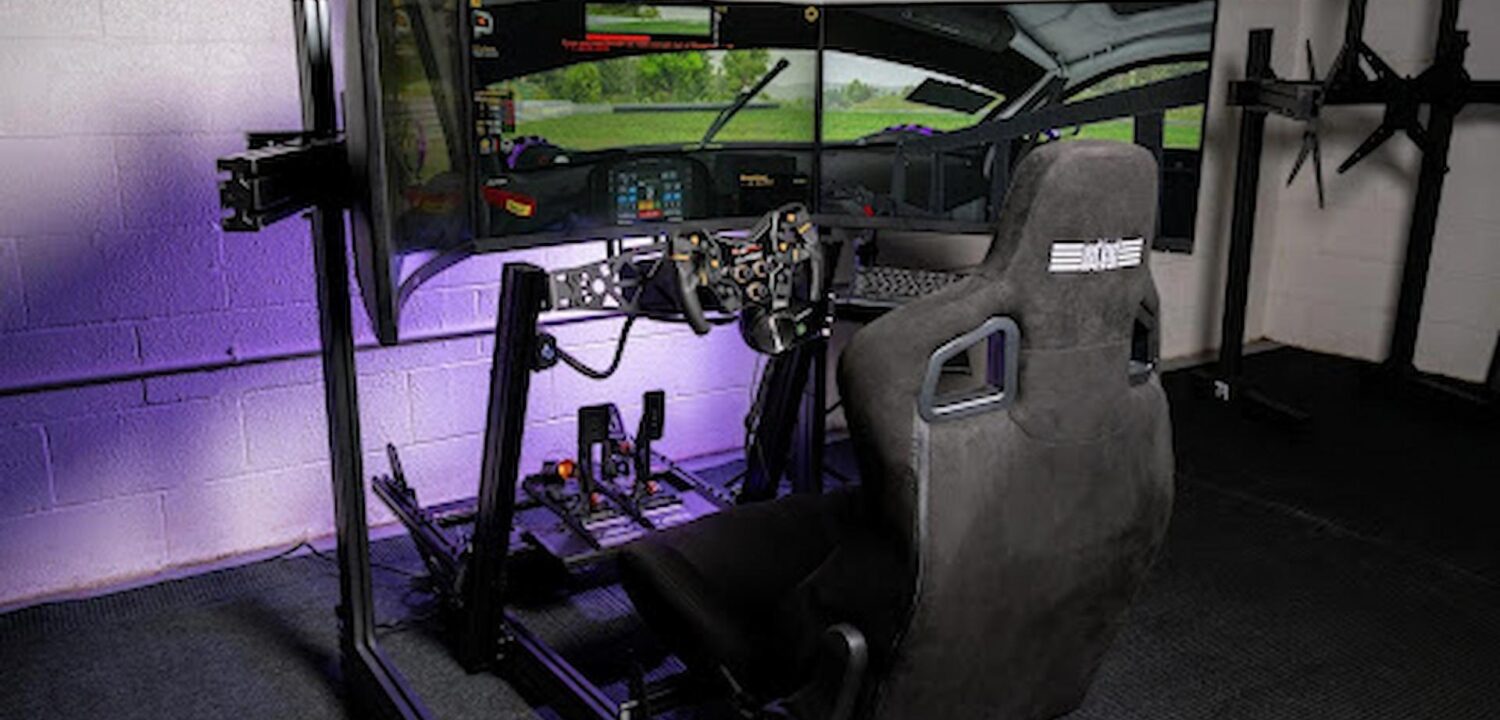
Purpose-built rigs are now far more common in UK homes. These frames provide solid mounting for wheels, pedals, and displays, reducing unwanted movement and improving consistency. Adjustable rigs allow drivers to fine-tune seating position, pedal angle, and wheel height, creating a more natural driving posture that mirrors real-world cockpit alignment.
This shift has played a major role in making home sim racing feel more serious and structured.
Hardware Advancements Shaping Modern Sim Racing
Hardware improvements have raised the performance standards of home sim racing, with modern components prioritising precision and consistency over novelty. Equipment is now designed to deliver clearer feedback, helping drivers develop control through feel rather than guesswork.
Steering wheels provide detailed force feedback, allowing drivers to sense resistance, surface changes, and grip loss. This reduces reliance on visual cues and supports smoother inputs, especially during braking and corner entry. Pedal systems have also evolved, focusing on pressure-based braking to encourage realistic technique and consistent muscle memory under demanding conditions.
Visual Immersion and Display Choices
Visual presentation has become a key part of sim racing realism, directly affecting awareness and control. Display choices now influence how confidently drivers judge speed, position, and surroundings.
Wider or multi-display setups improve peripheral vision, making corner entry and traffic awareness more natural while reducing reliance on camera movement. Visual clarity is often considered as important as wheel or pedal quality. Virtual reality increases immersion further, though comfort and system performance typically determine how often it is used for longer sessions.
Space-Efficient Solutions for UK Homes
The physical realities of UK housing have shaped how sim racing setups are designed. Modern solutions prioritise flexibility without sacrificing performance.
Designing for limited space
UK homes often have limited spare room, which has influenced how sim racing setups are designed. Compact frames, modular components, and foldable rigs allow users to integrate racing equipment into home offices or shared spaces without permanent disruption.
This flexibility has helped sim racing grow without requiring dedicated rooms or large layouts.
Managing noise and vibration
As setups become more powerful, noise and vibration management have become more important. Improved mounting solutions and vibration control help reduce sound transfer, making sim racing more compatible with shared living environments.
Software and Realism Improvements
Software development has played a key role in elevating home sim racing. Modern simulations demand precision and reward disciplined driving behaviour.
Driving physics and vehicle behaviour
Simulation software now models tyre grip, weight transfer, and surface variation with greater accuracy. These improvements reward smooth steering, controlled braking, and disciplined throttle use. As realism increases, small mistakes become more noticeable, encouraging drivers to focus on technique rather than speed alone.
Performance analysis and feedback
Built-in data tools allow drivers to review lap consistency, braking points, and steering input. This information supports structured improvement by highlighting habits and patterns rather than isolated results. Many UK sim racers now treat performance analysis as a routine part of their sessions.
The Direction of Sim Racing in the UK
UK sim racing is increasingly shaped by long-term thinking rather than short-term experimentation. Equipment choices now reflect a desire for balance, reliability, and progression.
As expectations rise, UK sim racers are becoming more selective about equipment choices and setup quality. Platforms such as Sim Racer UK align with this direction, reflecting a focus on progression, balance, and long-term usability rather than short-term upgrades.
The emphasis has shifted toward building setups that support improvement over time, rather than chasing the latest hardware trends.
Comfort, Ergonomics, and Long-Term Use
As session lengths increase, comfort has become a defining factor in setup quality. Ergonomic considerations now sit alongside performance metrics.
The importance of seating and posture
Long sessions place physical demands on the body, making seating and posture increasingly important. Adjustable racing seats provide better support and reduce fatigue, allowing drivers to maintain consistent performance without discomfort.
Personalisation over fixed layouts
Modern setups are rarely one-size-fits-all. Drivers adjust seating distance, pedal angle, and wheel height to suit their build and driving style. This level of personalisation improves comfort and reinforces consistency during extended use.
Practical Takeaways for Improving a Home Setup
- Focus on stability and ergonomics before upgrading performance hardware
- Adjust seating and pedal positions to minimise strain
- Develop braking consistency before chasing faster lap times
- Use performance data to identify habits rather than isolated mistakes
- Upgrade gradually to maintain balance across the setup
The Continuing Evolution of Home Sim Racing
Home sim racing in the UK continues to evolve through smarter design and better understanding rather than sheer complexity. Improved hardware, refined software, and thoughtful layouts have reshaped how drivers train and compete at home. As the scene matures, platforms like Sim Racer UK remain closely aligned with this shift, supporting sim racers who value realism, consistency, and long-term enjoyment.